The Cash Mandate: Australia Backs Cash
The short version
- Since 1 January 2026, supermarkets and fuel retailers must accept cash for in-person purchases of $500 or less, between 7am and 9pm.
- It’s good news. For a while cash felt like a dirty word. It isn’t. It’s the base of all payments.
- Cash is public money, made by the Reserve Bank and the Royal Australian Mint. Card and digital payments run on private networks.
- Steady cash volumes keep the cash network alive, so it’s there when the digital systems go down.
- An ATM on site keeps cash moving through your business and your community.
What the cash mandate says
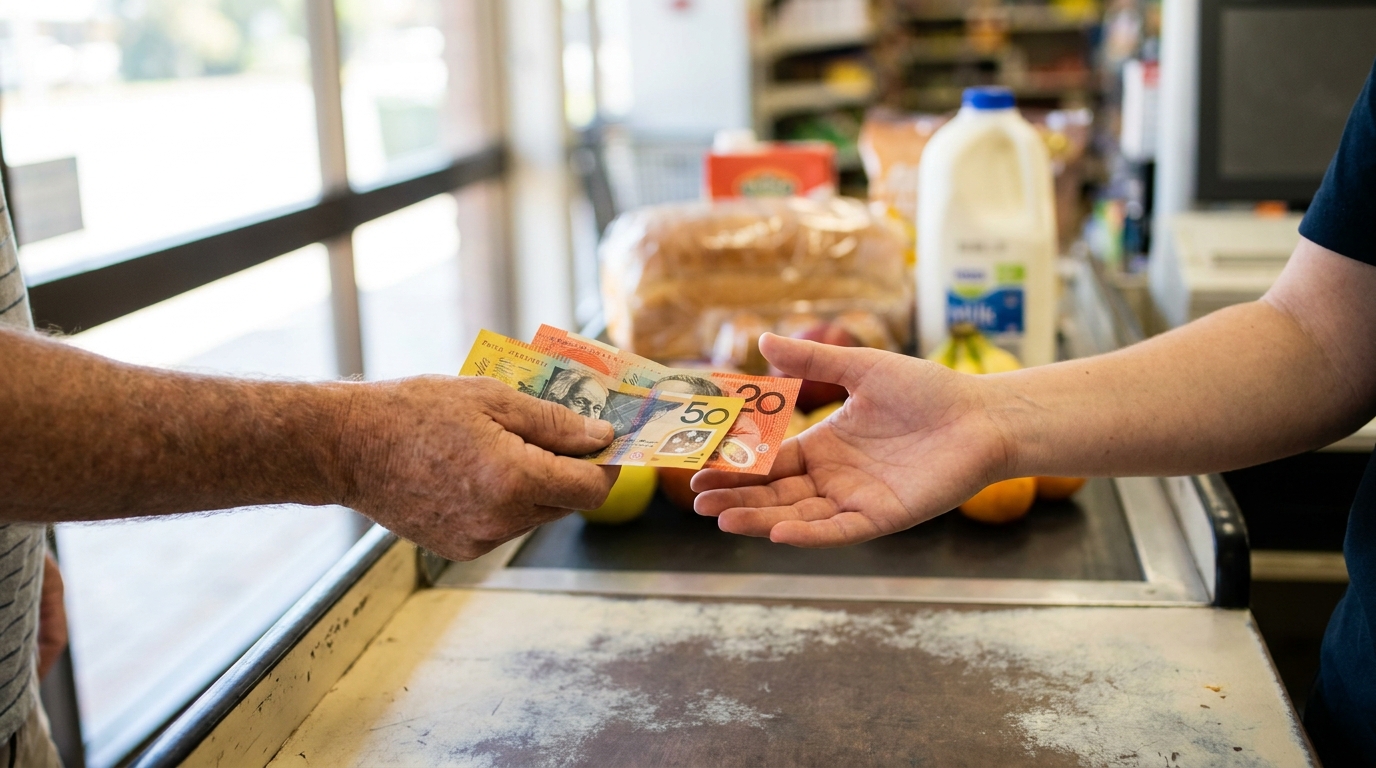
The Government has made it law: if you shop in person at a supermarket or a servo, you can pay in cash.
- Who: supermarkets and fuel retailers.
- What: in-person purchases of $500 or less.
- When: between 7am and 9pm.
- Who’s exempt: small businesses with turnover under $10 million, unless they trade under a bigger retailer’s brand.
The ACCC looks after the rules, through new cash acceptance industry codes. The Government will review the mandate after three years.
Cash was never a dirty word
For a while it seemed like cash was on the way out. Old-fashioned. Something to apologise for.
In reality, cash is the base of all payments. It’s the medium of exchange between people. Every tap and swipe is just a promise that, somewhere down the line, real money will move.
Cash is owned by everyone and no one. It’s a public good, like hospitals and roads. It’s the promise between people, and between businesses, that stores the value of our time and lets us swap it for the things we really want or need.
So it’s great to see the Government backing it in law.
Our history, in your pocket
We put our history, our treasures and our national identity on our notes and coins. The Reserve Bank tells the story of every face on our banknotes.
- $20: Mary Reibey, a pioneering businesswoman, and the Reverend John Flynn, who helped found the Royal Flying Doctor Service.
- $50: David Unaipon, the first published Aboriginal writer, and Edith Cowan, the first woman elected to an Australian parliament.
- $100: Dame Nellie Melba, the world-famous soprano, and General Sir John Monash.
- The new $5 will honour First Nations peoples’ connection to Country.
No card or app carries that. Cash is ours.
Public money, private rails
Australian banknotes are made and issued by the Reserve Bank. Coins come from the Royal Australian Mint. That’s public money, backed by the nation.
Digital payments are different. They run on privately owned networks. Visa and Mastercard are listed companies. eftpos sits inside Australian Payments Plus, owned mostly by the big banks. Every one of them takes a fee, and every one of them can go down.
Why steady cash volume matters
Cash has to be moved: from the Reserve Bank, through cash centres and armoured trucks, into ATMs and tills, and back again. That network has big fixed costs. It only works if enough cash moves through it.
The retail banks used to be the main way cash got around. Much of that has gone. Bank-owned ATMs fell from 9,621 to 5,143 between 2020 and 2025, almost half. See Banks retreated. Cash didn’t.
What remains is the independent ATM network and the cash-in-transit companies, despite the very public challenges at the country’s largest, Armaguard. Read more in Armaguard and the new cash law.
Keeping cash flowing through the biggest retailers gives that network a baseline volume, so it stays viable. That means it still has the capacity to respond when we need it. The Reserve Bank says cash is a valuable back-up to electronic payments, particularly during periods of disruption.
When the systems go down
On 8 November 2023 the Optus network went down for about 12 hours. More than 10 million people and 400,000 businesses were hit. Eftpos terminals stopped working. Businesses that could take cash kept trading. Those that couldn’t turned customers away.
On 18 November 2025 a fault inside Cloudflare, a company most people have never heard of, knocked major websites and apps offline around the world for hours.
Cash doesn’t need a network, a signal, an app or a server on the other side of the world. It just works, person to person. Read more in When the network goes down, cash still works.
Let’s keep cash moving
So long as people want cash, people can move it. There are good options to keep it moving through your business and your community:
- Local cash in transit: we can connect you with reliable cash-in-transit companies, often local businesses like yours, who supply change orders and collect your surplus banking.
- An ATM you load yourself with your own takings.
- A deposit-taking ATM: bank your cash on site and we complete a same-day settlement.*
*Conditions apply. Deposit ATM subject to approval.
What an ATM on site gives you
- Cash in your customers’ hands, inside your venue, where they spend it.
- Fewer card fees, because more of your sales are paid in cash.
- A back-up when the network fails: your customers can still get cash and still pay you.
- Managed for you: installation, cash logistics, fault alerts, reconciliation and national field service, all visible in the Dash web portal.
See the options to buy an ATM, or the deposit ATM for high-cash venues.
FAQ
What is the cash mandate?
Since 1 January 2026, supermarkets and fuel retailers must accept cash for in-person purchases of $500 or less, between 7am and 9pm. Small businesses with turnover under $10 million are exempt unless they share a larger retailer’s brand.
Does the cash mandate apply to my pub, club or cafe?
No. It covers supermarkets and fuel retailers. Other businesses can still choose to take cash, and an ATM on site makes it easy for your customers.
Why is the Government backing cash?
Many Australians rely on cash, and the Reserve Bank sees it as a valuable back-up when electronic payments fail. Steady cash use keeps the cash distribution network viable.
Who makes Australia’s cash?
The Reserve Bank of Australia issues our banknotes, and the Royal Australian Mint makes our coins. It’s public money.
Dash ATM has built and managed ATM networks across Australia since 2012, led by founder Paul Wrigley, in the ATM industry since 2002. Let’s keep supporting cash.
Sources: Treasury: Mandating cash acceptance (14 December 2025) · ACCC: Cash acceptance industry codes · RBA: Australia’s banknotes · RBA: Payments System Board Annual Report 2026 · APRA ADI Points of Presence, June 2025 · Senate: The Optus network outage · Cloudflare: 18 November 2025 outage · ACCC: AP+ merger determination